

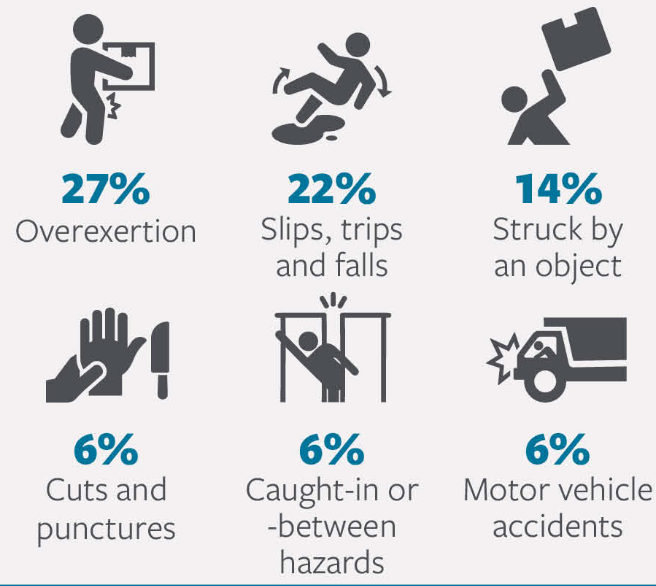
 Looking at incident and accident trends helps us stop making the same mistakes over again. We need to study past incidents to find where our weak spots are in our systems, save lives, lower costs, and build a safer culture where people feel protected at work or in daily life. Everyone has the right to a healthy and safe working environment. However, work-related injuries and illnesses can occur in any and all industries or occupation, and the impacts are felt by workers, their families, organisations and the community.
Failing to review your injury data can result in:
- Repeat incidents and accidents
- Higher workers’ compensation premiums
- Decreased productivity
- Lower employee morale
- Legal penalties under Work Health and Safety (WHS) laws etc.
The data collected must be true and transparent, need to be placed into categories and reviewed against industry benchmarks and local regulatory and Safe Work Australia statistics. We need to build a culture that recognises and readily accepts responsibility for health and safety within the workplace.
Several key reasons for studying incident and accident trends:
- Finding Hidden Patterns
- Reducing injuries (pain and suffering
- Reducing property and equipment damage
- Saving Lives
- Saving Money and reducing costs
- Making workplaces safer to attend
- Building Trust
- Build a strong safety culture etc.
Not every incident/accident can be avoided, and there will always be a level of risk. However, we can do our part to mitigate the safety risk. Spotting patterns in injury data isn’t just a compliance task—it’s a smart strategy for running a safer, more efficient organisation. If you would like an independent review of your current workplace activities get in contact with us as, we love making workplaces a safer place to visit.
https://www.worksafe.wa.gov.au/industry-benchmarks
https://data.safeworkaustralia.gov.au/insights/key-whs-statistics-australia/latest-release
https://nationaltraining.edu.au/how-to-spot-patterns-in-injury-data/